Fresno Restoration Services.
Fresno is the largest city we serve and the operational hub for our Central Valley crews. From century-old craftsman homes in the Tower District to newer builds out by Woodward Park and Copper River, the housing stock is wildly varied — and so are the ways property damage shows up.
What restoration looks like in Fresno
We respond to water, fire, mold, and biohazard emergencies across all 112 square miles of Fresno. Older neighborhoods around Downtown, Fig Garden, and the Tower District often deal with cast-iron drain failures, galvanized supply leaks, and knob-and-tube fires. North Fresno builds from the 90s and 2000s more commonly see slab leaks, water heater bursts in interior closets, and HVAC condensate overflows in second-story attic units.
Local hazards we see most
Triple-digit summer heat
Fresno regularly clears 105°F for weeks at a stretch. That heat cooks polybutylene and PEX fittings in attic runs, dries out wax rings under toilets, and pushes HVAC condensate lines past their capacity. When a leak starts in July, evaporation masks it for days — and mold follows fast.
Winter tule fog and cold snaps
December and January bring dense tule fog and occasional freezes. Uninsulated hose bibs on the north side of homes are the number-one call we get after a cold night. We show up with drying equipment, containment, and the ability to open walls without turning a small burst into a large remodel.
Older sewer laterals
A large share of central Fresno still runs on original clay laterals. Root intrusion and back-ups create Category 3 water losses that require full biohazard protocols — not just a mop and a fan.
Response in Fresno
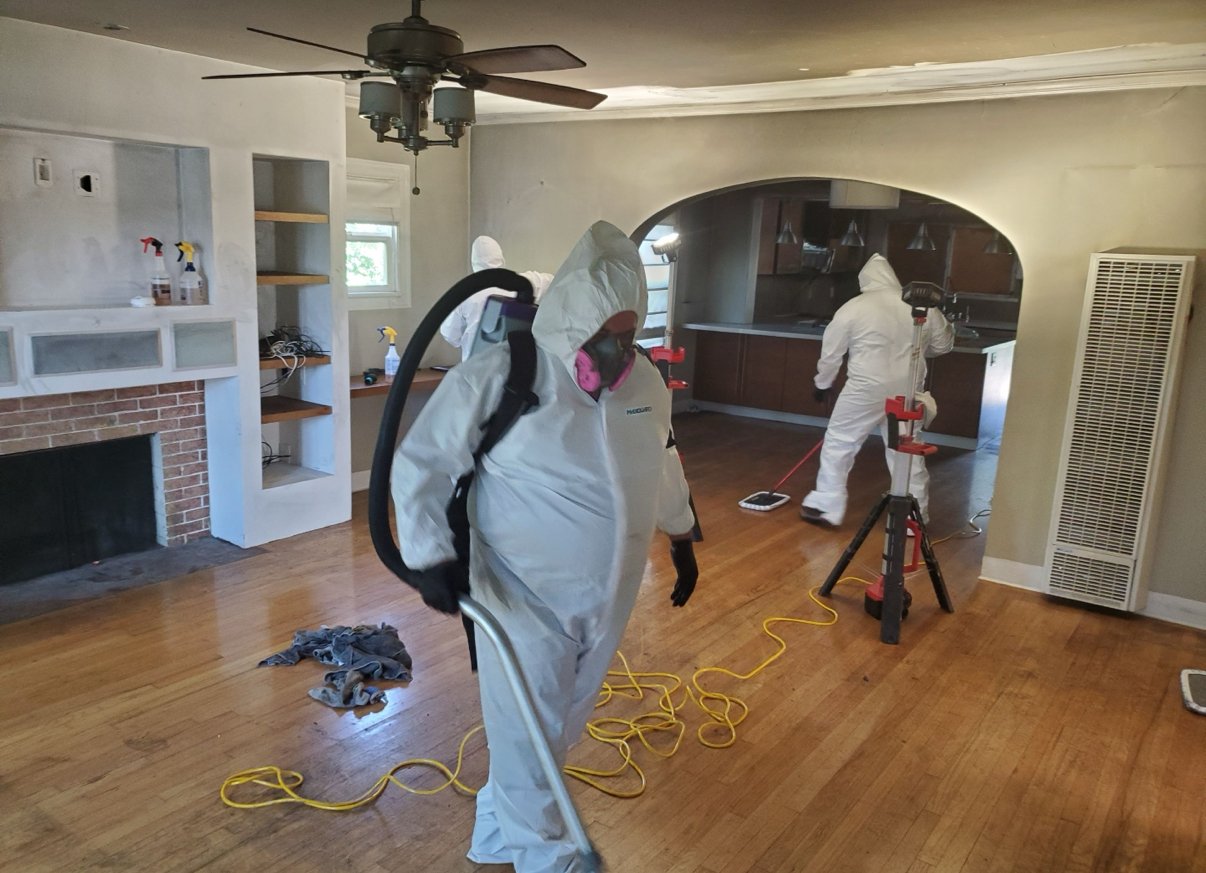
Our Fresno response window is typically 45 minutes or less, 24/7. Trucks are stocked for immediate mitigation — extraction, containment, and drying start on the first visit, not the second.
Neighborhoods & areas served
- Tower District
- Fig Garden
- Woodward Park
- Bullard
- Sunnyside
- Downtown
- Old Fig
- Copper River
- West Fresno
- Roosevelt
Restoration questions from Fresno property owners
How fast can you respond to a property emergency in Fresno?+
Our Fresno response window is typically 45 minutes or less, 24/7. Trucks are stocked for immediate mitigation — extraction, containment, and drying start on the first visit, not the second.
What are the most common restoration issues you see in Fresno?+
The recurring calls in Fresno tend to fall into a handful of patterns — most notably triple-digit summer heat, winter tule fog and cold snaps, and older sewer laterals. Each is covered in detail higher on this page, and each shapes how we scope work locally.
Do you serve rural addresses and outlying areas around Fresno?+
Yes. Our Fresno coverage includes both in-town addresses and surrounding Fresno County properties. Rural work — wells, septic, propane, outbuildings — is a regular part of our schedule, and our trucks are equipped for it.
Which cities near Fresno do you also serve?+
From Fresno we regularly work in Clovis, Sanger, Kerman, Selma, Madera, plus the rest of the Central Valley. If you're helping a family member or client outside Fresno proper, we very likely cover them too.
Do Fresno homeowners insurance policies cover restoration work?+
Sudden and accidental losses — burst pipes, appliance failures, wind-driven roof damage, most fires — are typically covered under standard homeowners policies. Long-term seepage, gradual leaks, and flood water usually are not. We document conditions in the format Fresno County adjusters expect and coordinate with your carrier throughout the claim.
Do you handle commercial and multifamily properties in Fresno?+
Yes. Commercial work — retail, office, industrial, agricultural, and multifamily — is a meaningful share of what we do in Fresno. We coordinate around business operations and tenant impact so downtime is minimized.
What should I do right now if I've just discovered damage in Fresno?+
Call the 24/7 line. If it's safe, shut off water at the main and cut power to the affected area. Don't run the HVAC after a fire or contamination event — it spreads the problem. Move small valuables out of the way if you can do so safely. We handle the rest on arrival.